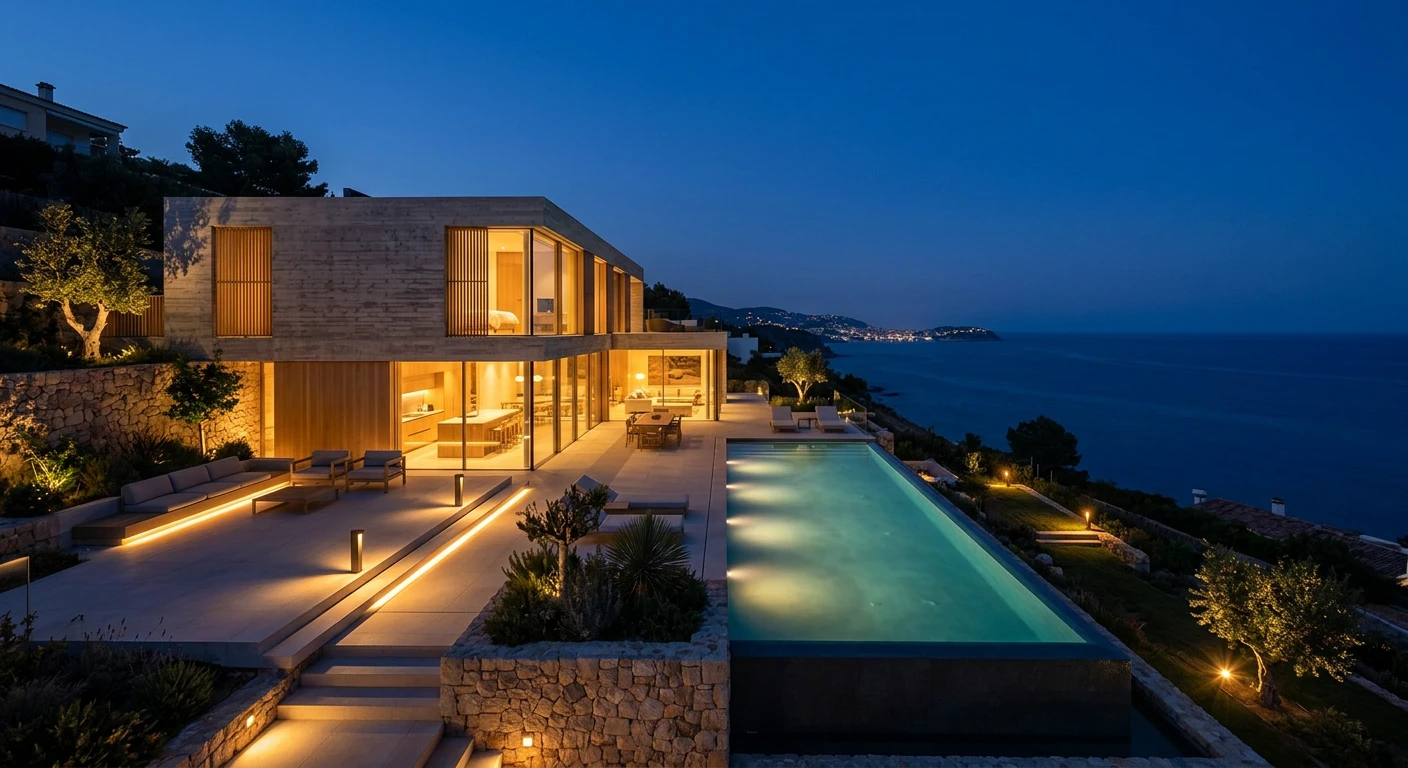
The ROI of AI in architecture: how small studios win bigger bids.
AI concept visualization changes the economics of the architectural pitch. Boutique studios no longer need a mega-firm’s rendering budget to compete. With Nuit, you cut presale visualization costs by up to 90 percent, walk into pitches with options instead of a single rigid render, and protect your margins while entering more bids.
What is the ROI of AI in architecture?
The ROI of AI in architecture is the gap between what a presale concept used to cost and what it costs now. A traditional photorealistic render runs 2,000 to 4,000 dollars in unbillable time; an AI concept on an infinite canvas costs a fraction of that.
For a small or mid-sized studio, that shift turns speculative pitching from a financial risk into a routine exercise. You can enter more bids, present more options, and win on the strength of your ideas rather than the size of your visualization budget.
What does the traditional presale actually cost?
Pitching a single photorealistic concept — say, the lobby of a boutique eco-hotel — runs through a rigid, expensive pipeline before you have won a thing.
4 to 5 days of skilled time
Sketching and ideation, 3D massing in SketchUp or Rhino, texturing and lighting setup, then rendering and post-production in Photoshop. Each stage stacks onto the last, and none of it is billable until you win the job.
2,000 to 4,000 dollars per image
Depending on your studio’s hourly rate, that single hero render burns thousands in unbillable time. For a mega-firm with a dedicated visualization team it is a rounding error. For a boutique studio it is a real gamble on a job you might not win.
No room for change
If the client says “make it feel more industrial, less tropical,” your team goes back to the drawing board for another expensive week of modeling. The workflow punishes exactly the iteration that wins clients over.
For the wider picture on how small firms compete with AI, see small architecture studios and AI.
How does the AI-powered presale change the equation?
Concept in 60 seconds, not 5 days
Instead of opening 3D CAD software, the principal or a senior designer drops a text prompt describing the eco-hotel lobby into Nuit. Within a minute they have four high-quality variations to choose from.
Refine by branching
Select the strongest layout, branch from it, and test three material palettes. Two hours of prompting and two hours of iterative refinement — half a day total — replaces a week of modeling.
Up to 90 percent lower cost
Shifting initial concept visualization from a traditional 3D pipeline to an AI pipeline reduces presale visualization costs by up to 90 percent. A 3,000 dollar speculative gamble becomes a 300 dollar morning exercise.
More pitches, same team
When each pitch costs a fraction of what it used to, you can enter three times as many bids a month without burning out your staff. Capacity, not just savings, is the compounding return.
Traditional presale vs the AI-powered presale
| Presale factor | Traditional 3D pipeline | AI concept (Nuit) |
|---|---|---|
| Time to first concept | 4 to 5 days | Half a day |
| Unbillable cost per pitch | 2,000 to 4,000 dollars | Roughly 300 dollars |
| Options shown to client | Usually one render | A canvas of variations |
| Cost of a client revision | Another week of modeling | Minutes, on a branch |
| Live changes in the meeting | No | Yes, in about 30 seconds |
| Pitches per month | Limited by render hours | 3x without extra staff |
| Best for | Final presentation hero shots | Early concept and presale exploration |
A 3,000 dollar speculative gamble becomes a 300 dollar morning exercise.
The honest read: a traditional render pipeline still earns its place for the final, fully-resolved hero image late in a won project. The AI canvas wins decisively at the presale stage, where speed, options, and cost decide whether you get the job at all.
How does presenting options help you win the room?
The financial savings are obvious. The real ROI is in how cheap generation changes what you bring to the pitch.
A vision with flexibility, not one bet
A traditional workflow forces you to present a single design and bet the client falls in love with that exact image. With an AI canvas you bring the lobby in morning light, at twilight with glowing pendants, with polished concrete, and with reclaimed timber — a direction the client helps choose.
Adapt on the fly
The most powerful moment in a modern pitch is changing a detail instantly. When a client hesitates about the tone, you type a micro-prompt and show a generated alternative in 30 seconds. That responsiveness builds immediate trust and proves your studio listens.
Higher win rates, lower acquisition cost
Multiple polished options build client confidence faster than a single rigid render, so you win more of the rooms you enter — and each room costs a fraction of what it used to. Lower customer acquisition cost and higher win rates compound together.
For more on pitching a concept that lands, see how to pitch a design concept to investors.
Does AI replace junior architects?
Honest section. The common fear is that AI exists to replace junior staff. In successful studios the reality is the opposite.
It removes grunt work, not people
AI does not replace your team; it removes the grueling, unbillable grunt work of early-stage visualization. Nobody spends three days texturing a speculative model that might get rejected.
Juniors do higher-value work
That reclaimed time goes into developing the actual spatial logic, researching sustainable materials, and assisting on billable construction documents for projects you have already won.
Principals focus on clients
By accelerating the concept phase, the principal architect spends less time managing 3D workflows and more time on the client relationships that actually close the deal.
The whole studio scales
A faster concept phase means the entire studio operates more efficiently — more pitches entered, more projects in flight, without proportionally more headcount or burnout.
Developers face the same economics from the other side — see AI tools for property developers.
Frequently asked questions
- How much does a traditional presale render cost a small studio?
- A single photorealistic concept render typically takes 4 to 5 days of an architect or 3D artist between sketching, 3D massing, texturing, and post-production. Depending on your hourly rate, that adds up to roughly 2,000 to 4,000 dollars in unbillable time per speculative pitch.
- How much can AI concept visualization save on presale costs?
- By moving early concept visualization from a traditional 3D pipeline to an AI pipeline, studios reduce presale visualization costs by up to 90 percent. A 3,000 dollar speculative gamble becomes closer to a 300 dollar morning exercise, freeing budget to enter more pitches.
- Does AI concept generation replace junior architects?
- No. AI removes the grueling, unbillable grunt work of early-stage visualization. It frees junior architects to develop spatial logic, research materials, and support billable construction documents instead of texturing speculative models that may be rejected.
- How does AI help small studios win bigger bids?
- Because generation is cheap, you walk into a pitch with options rather than a single rigid render: the lobby in morning light, at twilight, with concrete or with reclaimed timber. Presenting a flexible vision, and adapting live to client feedback, builds confidence faster than betting on one image.
- Can I change a concept live during a client meeting?
- Yes. On an infinite canvas you can type a micro-prompt when a client expresses hesitation about a detail, such as darker tones, and show a generated alternative in about 30 seconds. That responsiveness builds immediate trust and proves your studio listens.
- What is the broader ROI of AI for an architecture studio?
- Three things: lower customer acquisition cost because pitching is cheaper, higher win rates from presenting multiple polished options, and increased capacity to enter more pitches per month without burning out staff. AI lets the studio with the best ideas win, not just the biggest rendering budget.
Win bigger bids without the rendering budget.
Turn a 3,000 dollar speculative gamble into a 300 dollar morning exercise. Generate coherent concept options across exterior, plan, and interior, and walk into your next pitch with a vision the client helps shape.