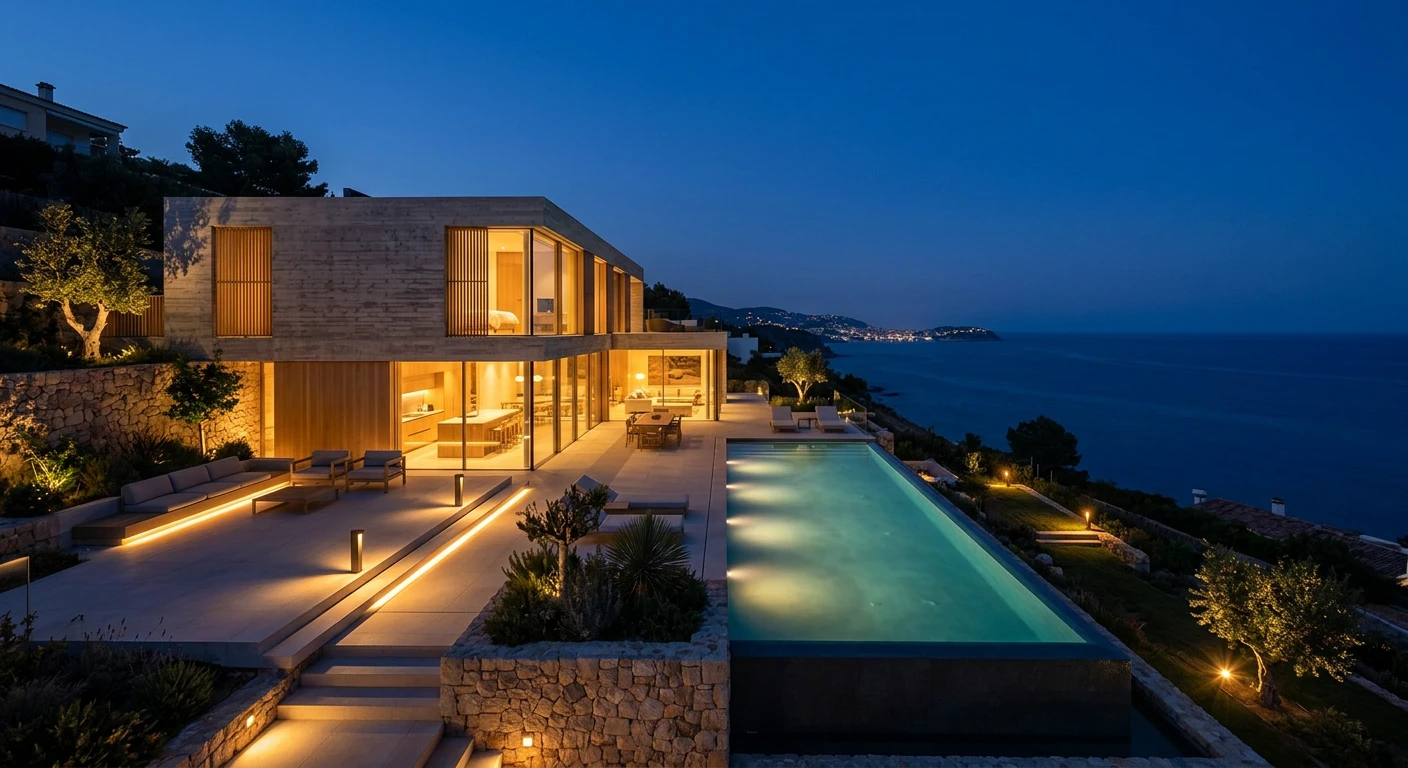
A Midjourney alternative built for whole-project architecture.
Midjourney makes stunning single images. Nuit makes coherent projects. If your work needs exterior, floor plan, and interior to hold together — not just look good individually — Nuit is the Midjourney alternative built for architectural and interior design work.
What’s a Midjourney alternative for architecture?
A Midjourney alternative for architecture is an AI tool that adds what Midjourney lacks for architectural work: project context, floor plan generation, BIM integration, and consistency across multiple views of one design. Nuit is the alternative built around project coherence — exteriors, floor plans, interiors, and masterplans live in one connected project and stay coherent with each other automatically. Midjourney remains strong for hero single-image quality; Nuit takes over when you need an actual project, not isolated renderings.
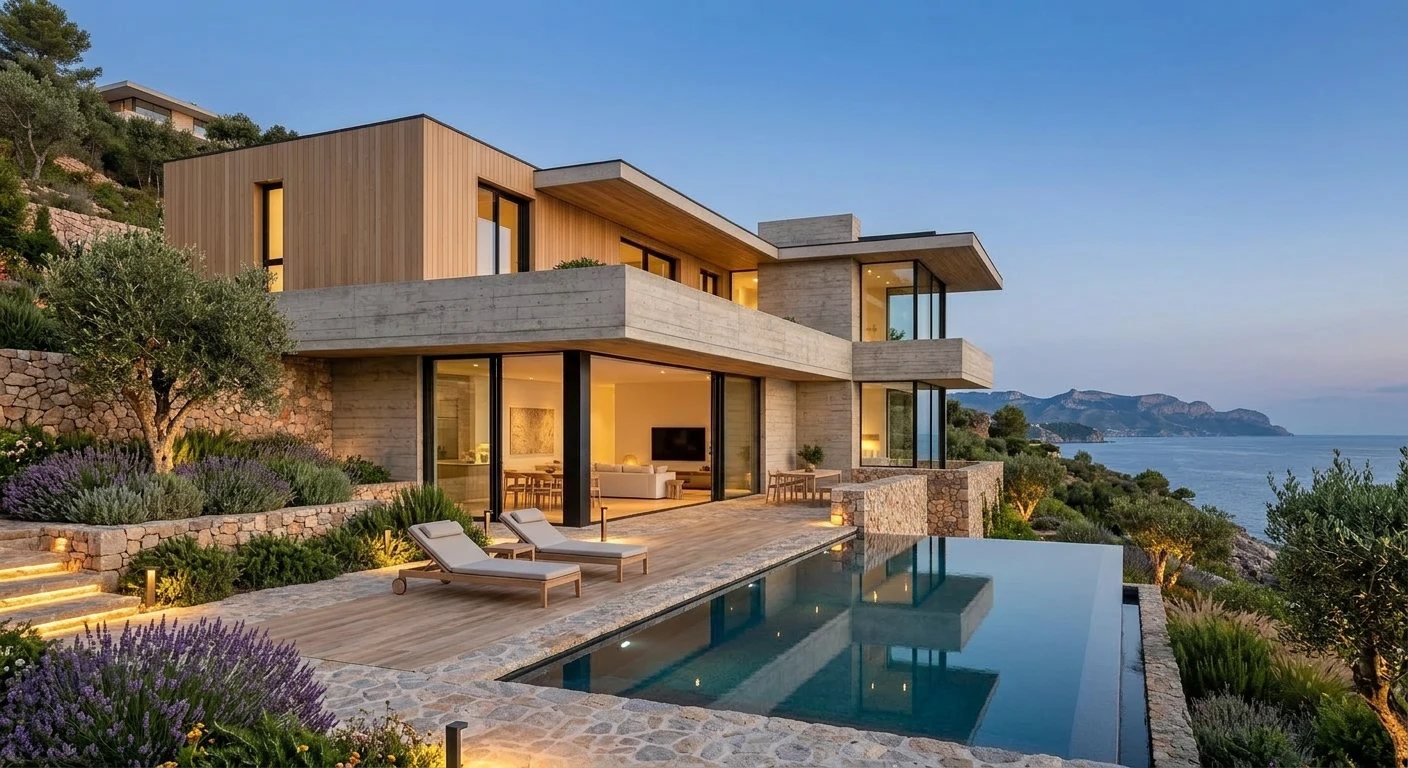
How do Nuit and Midjourney compare head-to-head?
| Capability | Nuit | Midjourney |
|---|---|---|
| Single-image aesthetic peak | High | Industry-leading |
| Multi-room project coherence | Yes, automatic | No |
| Floor plan generation | Yes (project context) | No (plan-shaped images only) |
| Exterior-interior linked | Yes | No |
| Branching from any result | Yes (tree-shaped) | Limited |
| Brief specificity (named materials) | Long-form briefs preserved | Image-prompt dilutes detail |
| BIM-adjacent workflow | Yes (via plans + references) | No |
| Reference image input | Yes | Yes (v6+) |
| Pricing | Free tier 10 generations no card | Subscription required for full use |
| Best for | Whole-project concept work | Hero single images, mood imagery |
The honest read: many architects keep both. Midjourney for the one or two hero images that anchor a presentation. Nuit for the whole project that surrounds those hero images. They’re not direct replacements — they cover different jobs.
Why do architects move beyond Midjourney?
Three structural gaps appear in every architectural workflow that runs on Midjourney alone.
Each room generated independently
Generate a kitchen, then a living room, then a primary suite in Midjourney and the three images drift. Different lighting, different material vocabularies, different atmospheric directions. For a whole-house project where everything should read as one design, this is structural, not a prompting problem. Nuit’s project model carries style and materials across rooms automatically.
No floor plan generation
Plans are central to most real projects. Midjourney produces plan-shaped images that don’t survive a designer’s read. For schematic plans coherent with a chosen exterior or interior, Nuit generates plans in the same project as the building views.
No exterior-interior link
Exterior and interior renderings in Midjourney don’t know about each other. The kitchen doesn’t know about the cladding outside; the bedroom doesn’t know about the courtyard. Nuit carries that relationship in the project model — change the exterior cladding and the interior atmosphere updates.
For the deeper read on what specifically Midjourney misses for architectural work, see Midjourney for architecture.
Not replacements. Different jobs.
Midjourney generates the hero image; Nuit builds the project around it. Keep exteriors, floor plans, interiors and masterplan as one consistent project, and carry the same references and refinements across every mode.
When should you use Nuit instead of (or alongside) Midjourney?
When your work spans multiple rooms
Whole-house, whole-property, or multi-space projects benefit from coherence Midjourney doesn’t provide. Switch to Nuit for these; keep Midjourney for one hero image if you want.
When you need floor plans
Any project where plans matter — which is most architectural and interior projects of any meaningful scope. Nuit generates plans in the same project as the building views.
When briefs are long and specific
Long, detailed material briefs (“warm white limewashed plaster, smoked oak floors in matte finish, brushed brass hardware, morning light from east”) preserve in Nuit’s text-first model. Midjourney’s image-prompt blend tends to dilute named materials.
When you’re iterating on a chosen direction
Branching from a chosen image to explore variants — different cladding, different stone, different time of day — is the core Nuit workflow. Midjourney supports variations but loses the base direction more often.
When is Midjourney still the right choice?
Honest section. Midjourney earns its place.
Hero single-image quality
When you need the one polished image that anchors a presentation or marketing piece, Midjourney’s aesthetic peak is still the highest in the category. Most architectural decks keep Midjourney for exactly this.
Mood imagery and atmospheric exploration
Pure aesthetic exploration before a project direction exists — Midjourney’s broad style range fits this perfectly.
When project coherence doesn’t matter
Single-image projects, competition entries with one hero shot, marketing imagery for an established brand. Midjourney is the cleanest tool for the job.
Established Midjourney prompting practice
If you have refined Midjourney expertise producing work you’re proud of, the cost of switching isn’t always justified. Adding Nuit alongside is often the better answer than replacing.
A note on Nano Banana, which doesn’t appear in this comparison: it’s a respected precision-editing tool used alongside both Midjourney and Nuit. Where Midjourney generates and Nuit explores, Nano Banana edits — change one material in a finished render, swap a fixture, recolor a wall without re-rolling. It’s complementary to both.
For more on Midjourney’s specific role in architectural work, see Midjourney for architecture.
Frequently asked questions
- Is Nuit a Midjourney alternative?
- Yes — for whole-project architectural and interior work. Nuit is the alternative built around project coherence across multiple views of one design. Midjourney remains stronger for hero single-image quality and pure mood exploration. Many designers use both: Midjourney for the one or two hero images, Nuit for the project surrounding them.
- Why use a Midjourney alternative for architecture?
- Three reasons appear consistently: project context across multiple views (Midjourney generates each image independently), floor plan generation (Midjourney doesn’t), and exterior-interior coherence (Midjourney can’t link them automatically). The structural gaps show up in any whole-project architectural workflow.
- What’s the best Midjourney alternative in 2026?
- Depends on the work. For text-first whole-project concept: Nuit. For sketch-to-render workflows: Gendo or mnml.ai. For BIM-integrated rendering: Veras. For photo restyling: ArchitectGPT. The full comparison covers 8 tools with honest pros and cons of each.
- Does Nuit do everything Midjourney does?
- No, and that’s intentional. Nuit doesn’t try to match Midjourney’s peak hero-image quality — it focuses on whole-project work where Midjourney has structural gaps. Use Midjourney for the hero shots; use Nuit for the project surrounding them. They cover different jobs.
- Is there a free Midjourney alternative?
- Yes — Nuit offers a free tier with 10 generations and no card required. That’s enough to explore the branching workflow across exterior, plan, and interior for a small project. Midjourney requires a subscription for full use.
- When is Midjourney still the right choice?
- Hero single-image quality, mood and aesthetic exploration before a project direction exists, single-image projects that don’t need coherence with anything else, and established Midjourney workflows you’re already proud of. For these, Midjourney is the cleanest tool.
- Can I use Nuit and Midjourney together?
- Yes — this is the most common professional pattern in 2026. Nuit handles whole-project concept work (exterior + plan + interior + materials coherent). Midjourney handles the one or two hero images that anchor the client presentation. Tools coexist; they don’t compete for the same job.
Try the Midjourney alternative built for projects.
Generate coherent concept directions across exterior, floor plan, and interior in one project. Or keep using Midjourney for hero images and add Nuit for everything around them.