An AI interior design tool that keeps every room coherent.
Generate AI interior concepts that hold together across kitchen, living, primary suite, bath and beyond — in one connected project. Most AI interior tools generate each room independently; Nuit carries style, materials and atmospheric direction across every room, so the whole interior reads as one design instead of a stack of separate renderings.
What is an AI interior design tool?
An AI interior design tool generates room visualizations — kitchen, living, primary suite, bathroom — from a written brief in seconds. Most tools generate each room independently, leaving the designer to force coherence by hand through prompt management and reference images. Nuit handles coherence automatically: rooms in the same project share style, materials, lighting direction and atmospheric intent, so a multi-room interior holds together as one project — not five separate images that happen to share a client deck.
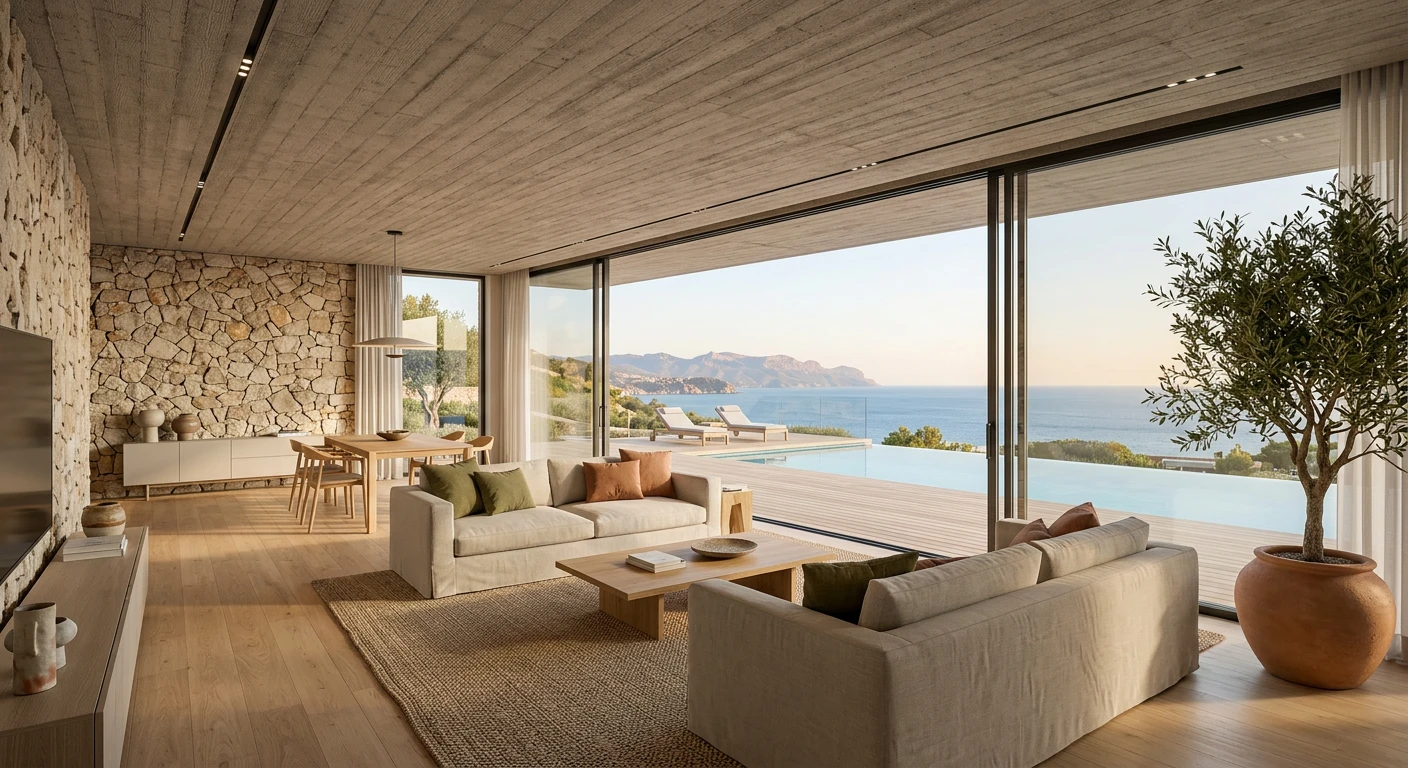
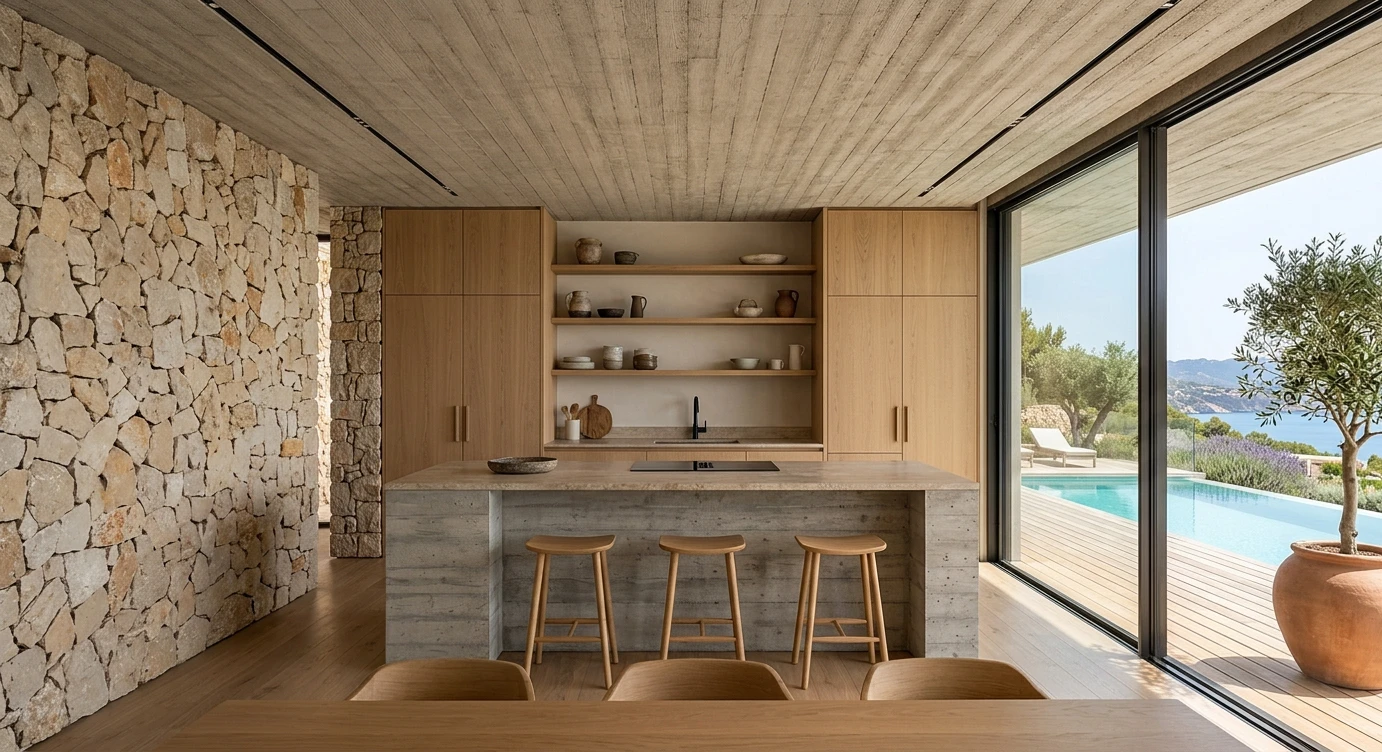
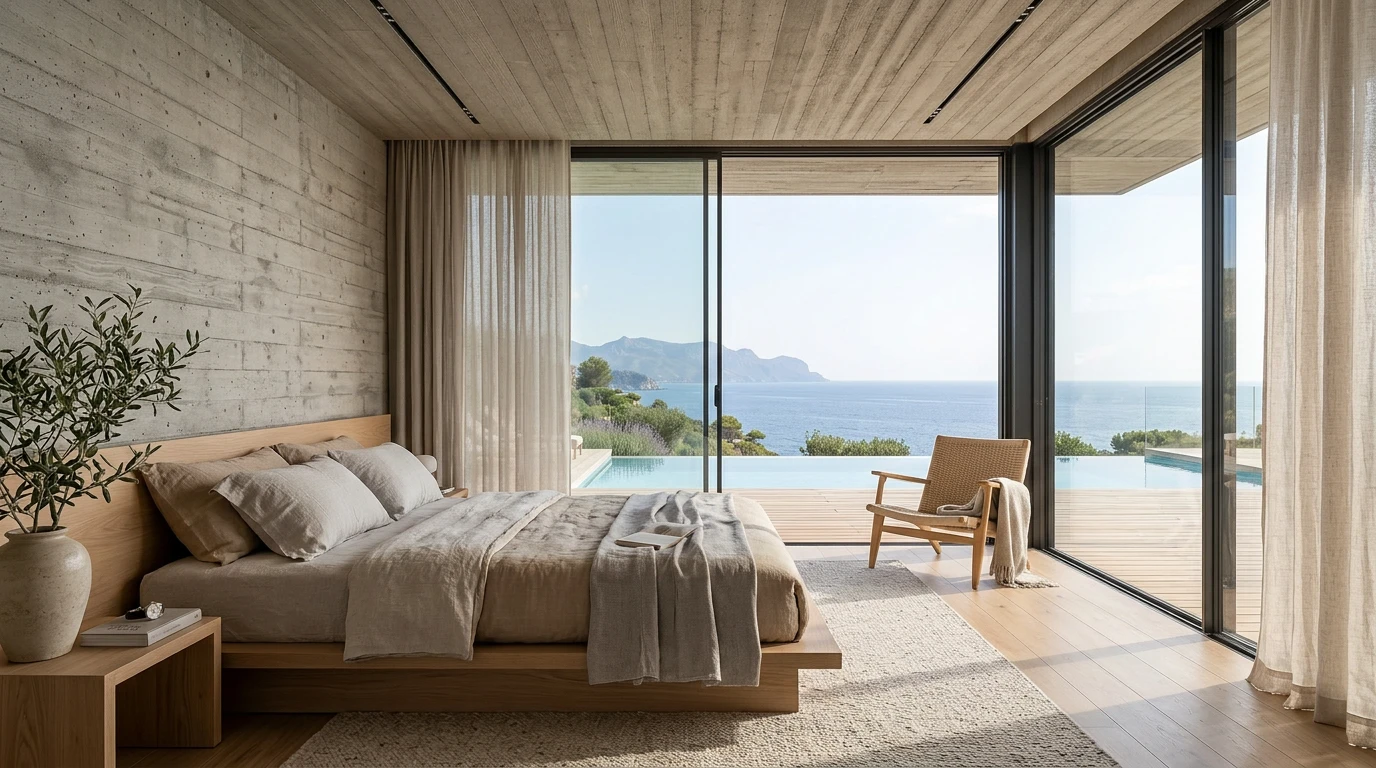
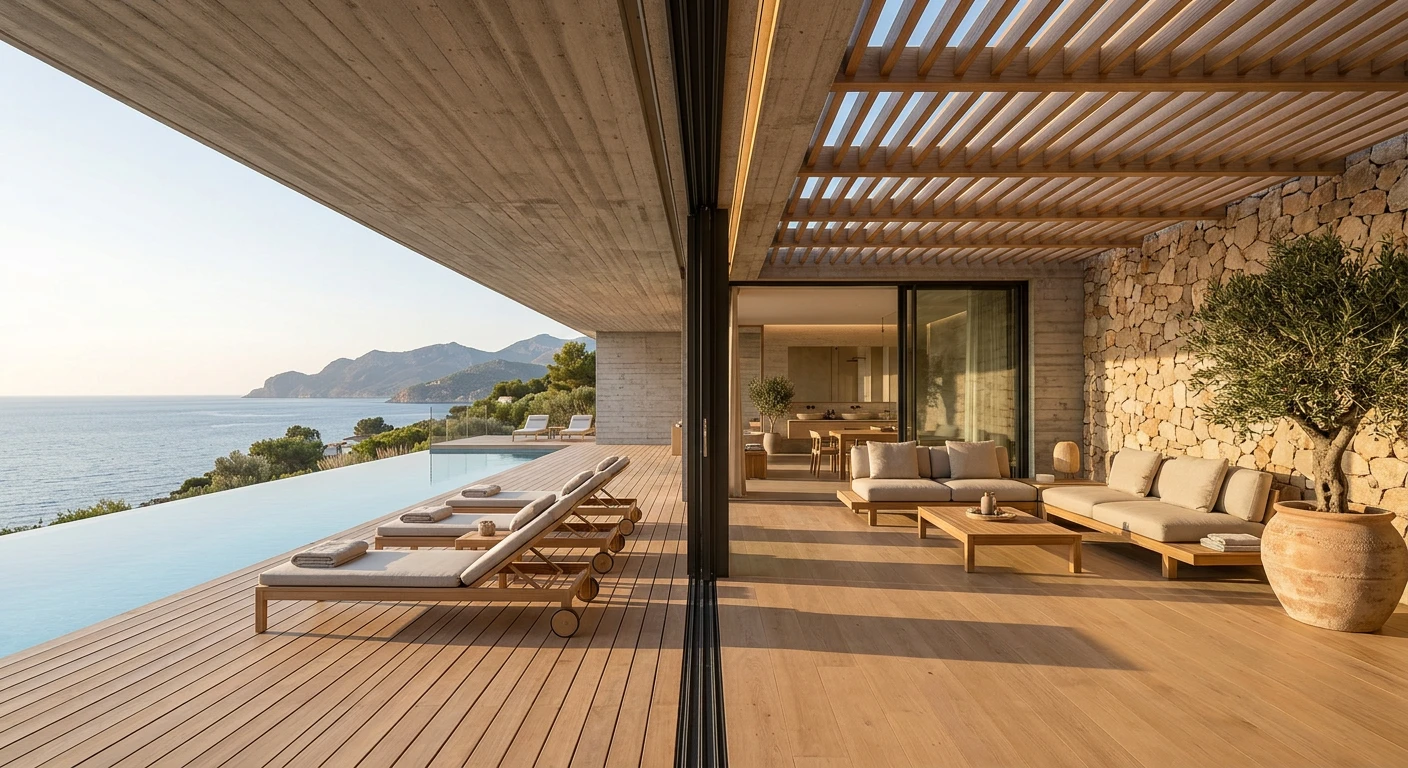
One project, room by room.
The same concept carried into every interior. You describe the direction once; each room keeps its materials, proportions and light.
How does it work?
Write a brief or upload references
Describe the interior direction — named materials, named style references, atmospheric cues. Upload reference imagery if you have it. Sample brief: “Japandi primary suite, pale oak floors in matte oil finish, warm white lime plaster walls, low platform bed in raw oak, brushed brass accents, soft morning light from the east.”
Generate the room and explore variants
Get the first room in seconds. Branch from the result to explore variants — different materials, different time of day, different furniture proportions — then pick the strongest direction.
Generate the next room in the same project
Open the kitchen or living room in the same project. Style, materials and atmospheric direction carry over automatically — no need to re-brief the palette from scratch for every space.
Rooms of one project, not a folder of stray renders.
The hard part of interior visualization isn't one good picture — it's keeping a whole home coherent. Nuit carries the same finishes, furniture language and light from the living room to the kitchen to the primary suite, so every interior reads as part of the same design. That structural difference — the project model — is what makes multi-room coherence automatic instead of a manual fight with prompts.
How does Nuit interior design differ?
| Capability | Nuit | InteriorAI | Midjourney | Decor8 AI |
|---|---|---|---|---|
| Photo restyling of existing rooms | Yes (reference-based) | Yes (strong) | Limited | Yes |
| New-build interior generation | Yes (text-first) | No | Yes | No |
| Multi-room coherence | Yes, automatic | No (each room independent) | No | No |
| Long-form material briefs | Supported | Preset-driven | Image-prompt diluted | Preset-driven |
| Coherent with the exterior | Yes (whole-project) | No | No | No |
| Free tier | 10 generations, no card | Limited | Limited trial | Limited |
| Best for | Whole-project interiors | Restyling existing rooms | Hero single rooms | Consumer restyling |
For a deeper comparison of dedicated interior tools, see AI interior design tools for professionals. For the photo-restyling category specifically, see InteriorAI alternative.
Who uses Nuit's AI interior design tool?
Interior designers on whole-house projects
Compress concept-phase work. Generate four kitchen variants, three living-room directions and two primary-suite atmospheres — all coherent with each other — in an afternoon, and bring the strongest direction to the client deck with the whole interior holding together.
Homeowners planning a remodel
Explore multiple direction options before paying a designer. Compare kitchen layouts, see the living room in three styles, decide what you actually want, and arrive at your designer’s door with clear visual intent.
Real estate developers visualizing buyer-ready interiors
For new construction or major renovations being sold to buyers, generate interior concepts that match the project’s exterior and overall direction — then use them in marketing, listings and pre-sale buyer communication.
Hospitality concept teams
For boutique hotels, restaurants and short-term rental properties, generate guest-room and key-space interiors coherent with the property’s exterior and brand direction.
Frequently asked questions
- What's the best AI interior design tool in 2026?
- Depends on the workflow. For multi-room coherent projects, Nuit. For restyling existing room photos, InteriorAI or Decor8 AI. For hero single-room images, Midjourney remains industry-leading. For BIM-integrated rendering, Veras. Most professional designers use two or three tools together.
- Can AI design an interior?
- AI can produce interior concept directions — room visualizations, material palettes, atmospheric direction — from a written brief in seconds. AI cannot specify products (manufacturer, SKU, lead time), verify code compliance, calculate furniture budgets, or replace an interior designer's judgment on what works for a specific client. AI compresses the concept phase; the designer's role persists.
- Is AI interior design free?
- Nuit offers a free tier with ten free generations and no card required. InteriorAI offers limited free use. Most other interior AI tools have limited trials and subscription plans starting around USD 10-30/month. Professional designers typically run USD 50-150/month across two or three tools.
- How does Nuit differ from InteriorAI?
- InteriorAI specializes in photo restyling — upload an existing room photo, pick a style preset, see the restyled version. Nuit handles new-build interiors from a written brief AND multi-room coherence across one project. Different tools for different starting points; many designers use both.
- Can AI keep multiple rooms looking consistent?
- Yes — but only some tools. Most AI image tools generate each room independently, which causes style drift, material mismatches and atmospheric inconsistencies across what should be one design. Nuit's project model carries style, materials and atmospheric direction across rooms automatically. This is the structural difference behind multi-room coherence.
- Will AI replace interior designers?
- No. AI compresses concept exploration and atmospheric visualization — work that used to fill weeks now fills hours. The designer's role shifts toward judgment (what direction is right for this client), specification (which products to actually buy) and project management. The workflow changes; the role persists.
- Does Nuit work for residential and commercial interiors?
- Yes. Residential is the most-used typology — primary residences, vacation homes, ADUs. Commercial use cases include hospitality (boutique hotels, restaurants), small office and retail, and short-term rental properties. Commercial-scale interior design (large office, healthcare, education) typically still uses specialized AI tools alongside traditional CAD/BIM.
- Can I use AI for interior renovation?
- Yes — upload a photo of an existing room and Nuit can generate restyled versions or full new-direction concepts that respect the existing structure. For pure photo-to-restyle on existing rooms, dedicated tools like InteriorAI or Decor8 AI are also strong. Nuit's advantage shows up when the renovation includes multiple rooms or links to exterior changes.
- How long does it take to generate a multi-room interior?
- A typical multi-room project — kitchen + living + primary suite + bath — takes about 20-40 minutes of designer time to generate first-pass concepts in Nuit, then another 30-60 minutes to iterate to refined directions. Compared to traditional mood-boarding plus first-pass renderings (typically 1-2 weeks per room), the compression is roughly 20-50x.
- What styles does AI interior design support?
- Most named architectural and interior styles are well-represented in current AI training data. Japandi, Scandinavian, Mid-Century Modern, Mediterranean, modern farmhouse, Wabi-Sabi, Boho, Industrial, Coastal, Mountain Modern, Tropical Modern — all generate strongly.
Related reading
Start your interior project. Free to begin.