
 de charrette
the night of the cart
A name borrowed from architecture school.
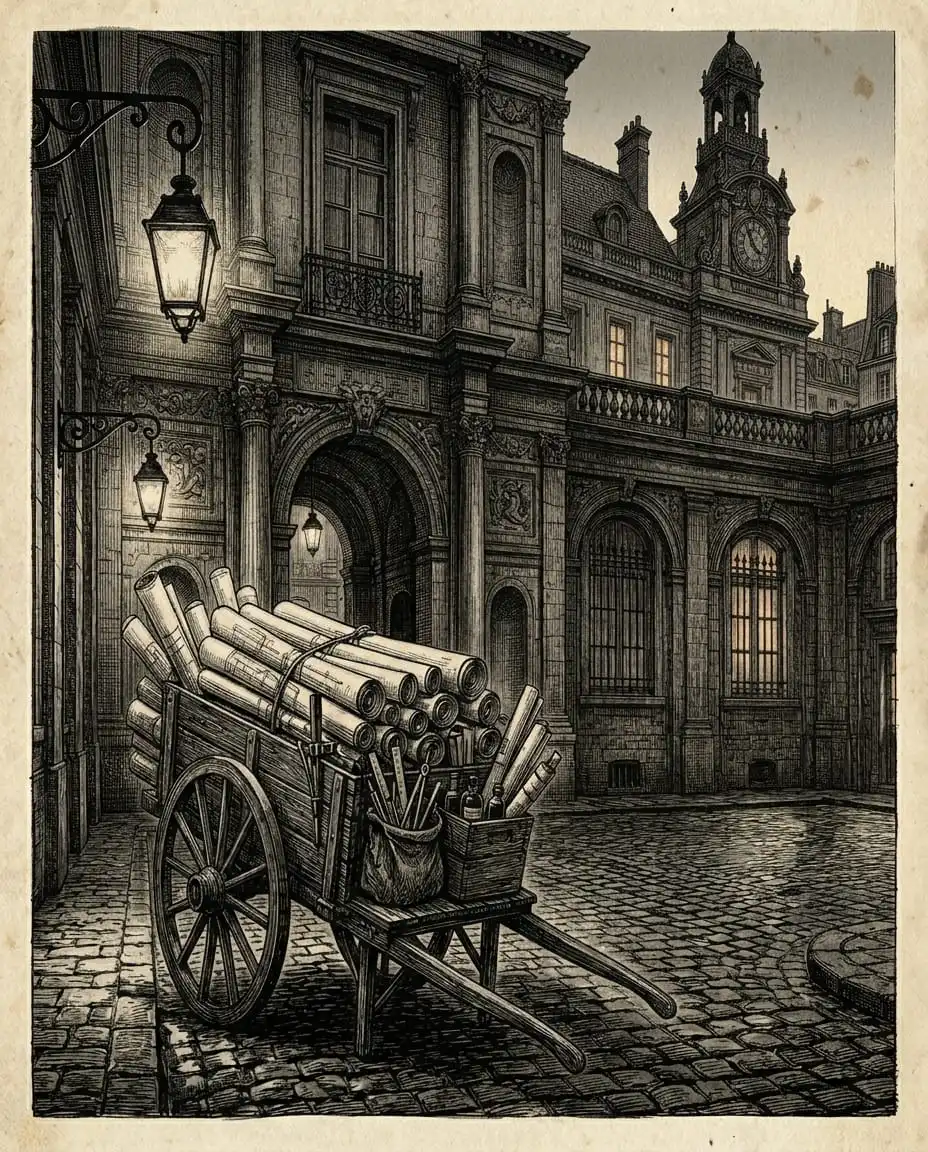
In late 19th‑century Paris, students at the École des Beaux‑Arts worked for weeks on architectural projects — and finished them all in one final, impossible night. At dawn, runners would arrive with wooden handcarts — charrettes — to collect the drawings and deliver them to the jury. The students, frantic to add the last lines before the deadline, would climb onto the carts and keep drawing as the horses pulled them through the cobblestone streets.
That was the original meaning of en charrette: on the cart, still working, running out of time. The word entered the architectural vocabulary and never left.
The all‑nighter as a ritual.
“It wasn’t punishment.
It was the moment the idea became real.”
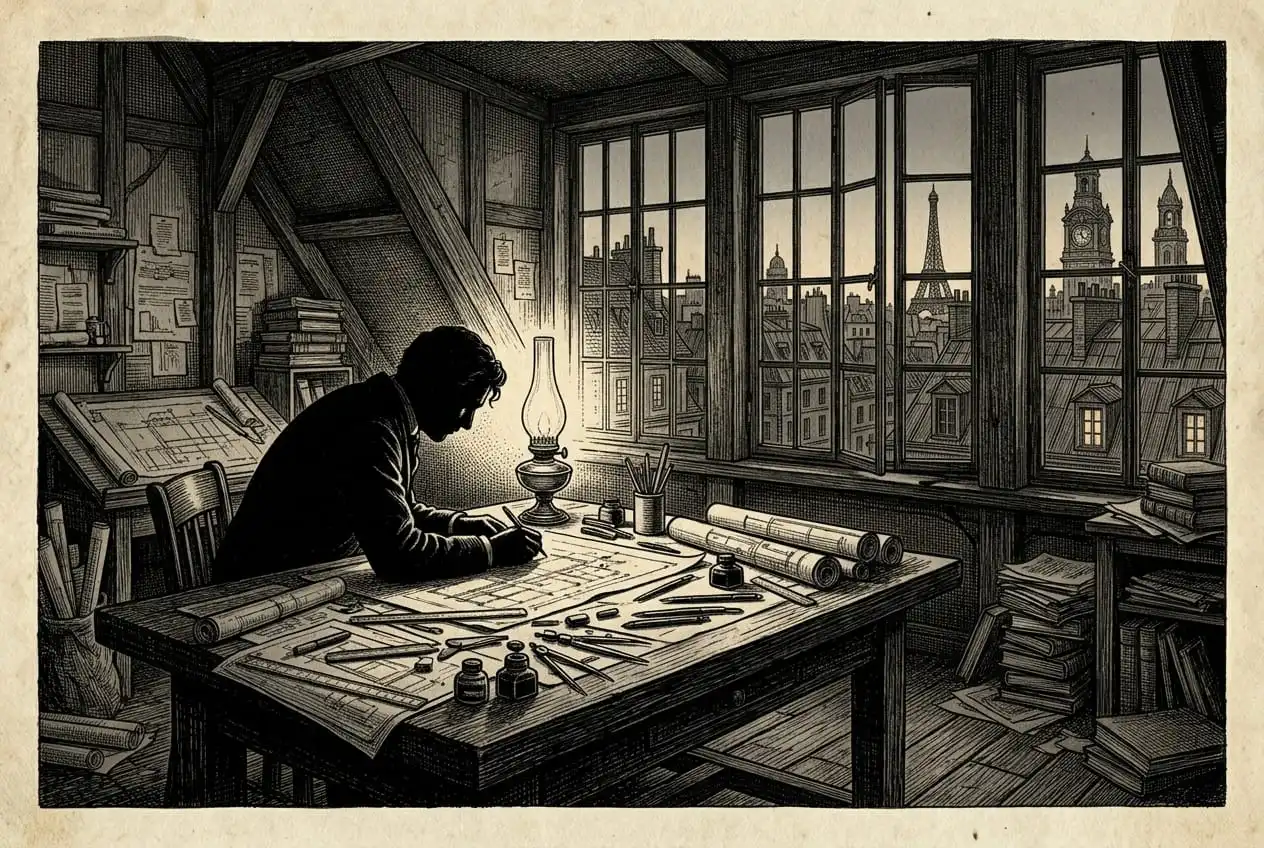
The charrette wasn’t just about deadlines. It was the ritual where the abstract — a brief, a program, a set of constraints — finally became an object. Architects who lived through it talk about it the way musicians talk about late‑night studio sessions. Something about working against time, against sleep, against your own doubts, made the work sharper.
The charrette was where you stopped thinking and started deciding.
Why we built Nuit.
Today the charrette looks different. The handcart is a browser tab. The oil lamp is a laptop screen. The jury is a client meeting at 9 AM. But the feeling is identical: you have a brief, you have a night, and by morning an idea has to exist in the world as something you can point to.
We built Nuit for that feeling. For the moment when you stop sketching and start deciding. When the brief has to become a visual, fast, and the cost of a wrong direction can’t be a whole night wasted.
The brief
Describe in plain language. No 3D, no sketches. Just words.
The iteration
Branch, improve, explore. Every version kept. Nothing lost.
The delivery
Export full resolution. Walk into the room with something real.
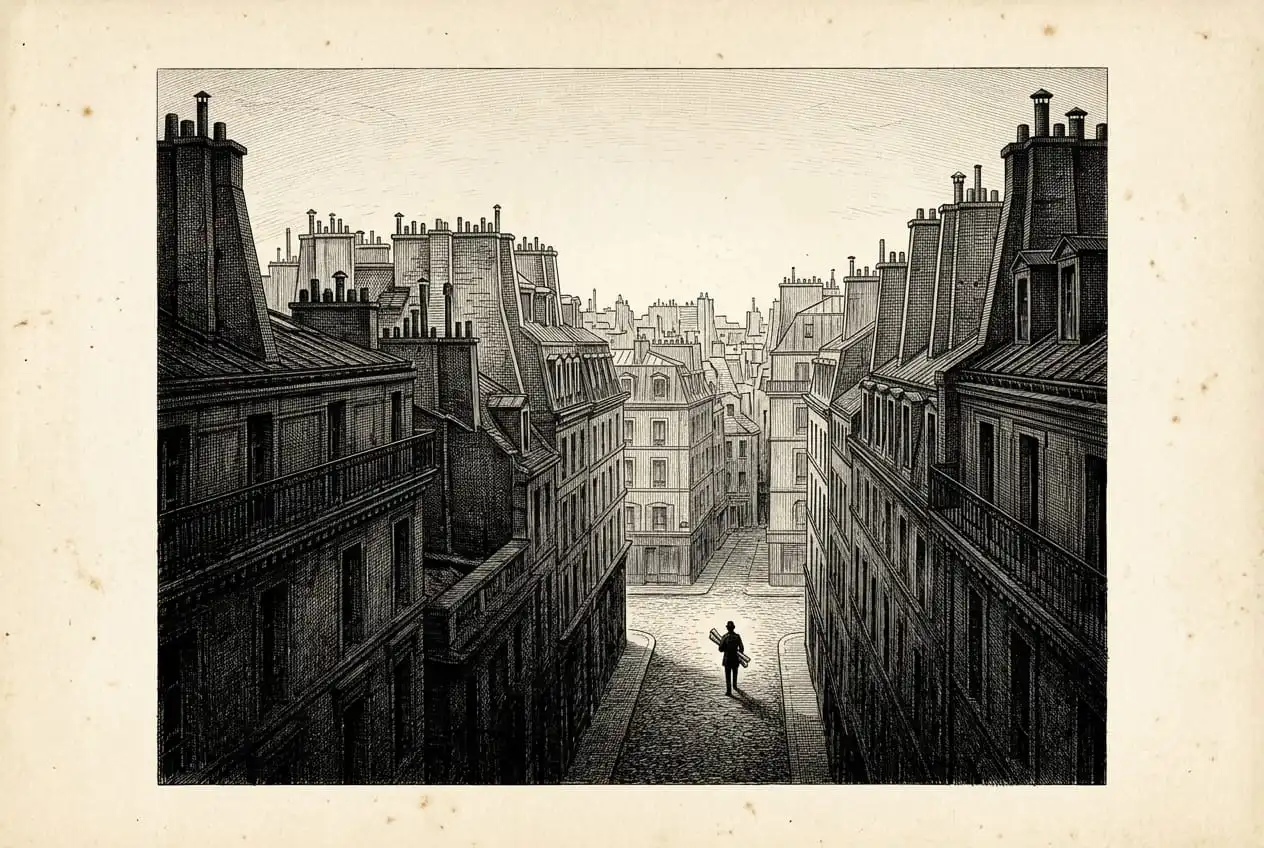
— At the end of the night —
We built the tool we wish we had at 4 AM.
Come run your own charrette. No carts required.